Key Takeaways
- The safety failures that drive avoidable readmissions happen between organisations, not within them — in the handoffs where clinical intent is lost and nobody owns the gap
- SOPs create a compliance illusion: the document exists, the box is ticked, but behaviour doesn't change and the risk isn't managed
- Different organisations — and different practices within the same PCN — don't share a common definition of what responsibility transfer actually means in operational terms
- You can't train or SOP your way out of a gap that exists between organisations rather than within them
- The shift needed is from periodic compliance to continuous clinical safety — infrastructure that surfaces unactioned discharge letters, unreconciled medication changes, and unreceived referrals in real time
- Patient safety follows the patient, not the org chart. Until infrastructure does the same, we'll keep investigating the same failures
Healthcare doesn't fail where you'd expect it to.
The instinct is to look for safety failures inside organisations — a misdiagnosis, a prescribing error, a missed test result. And those happen. But the pattern that keeps repeating, the one that drives avoidable readmissions and harms patients who were otherwise well-managed, is simpler and harder to fix.
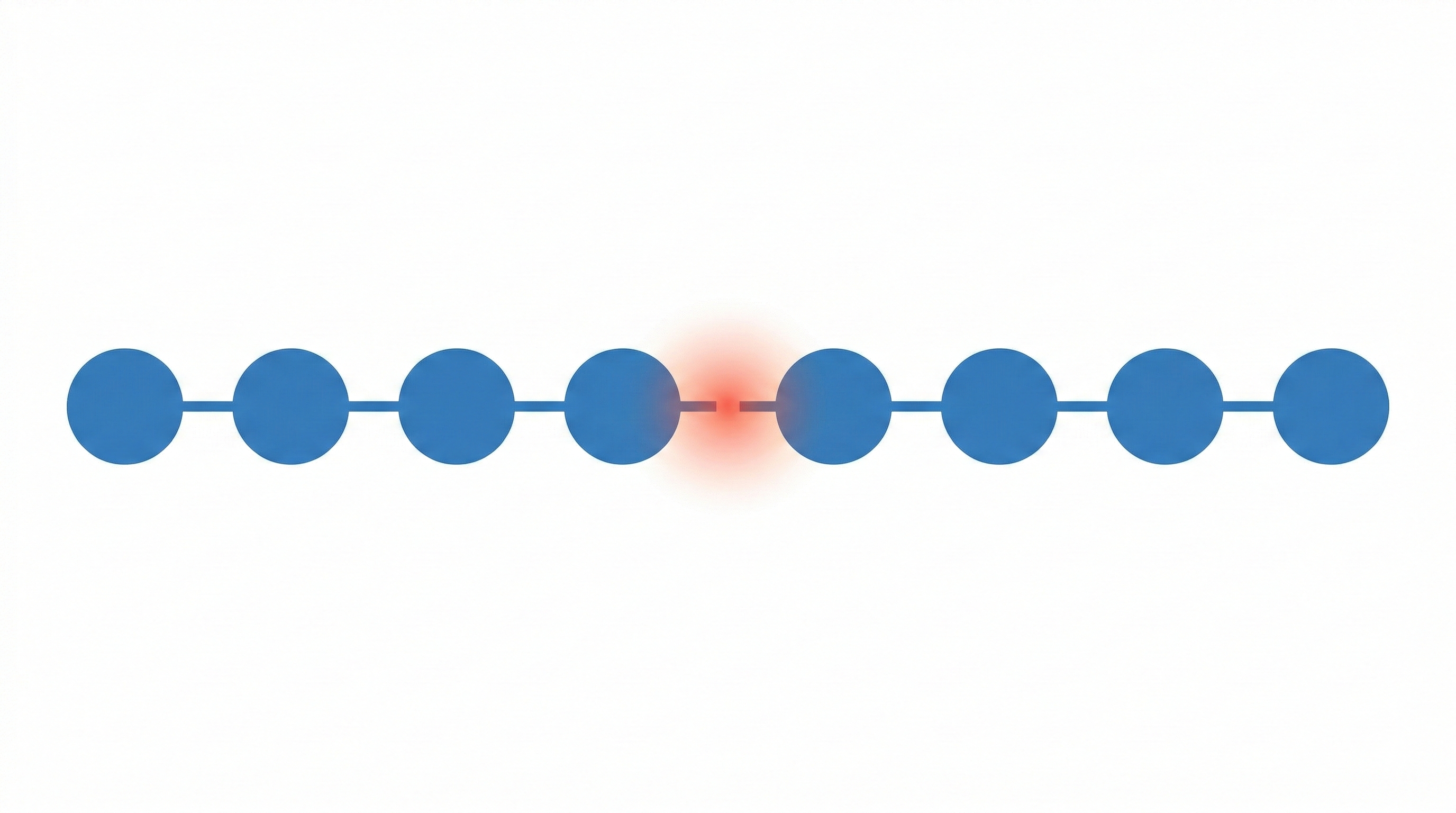
It happens in the spaces between organisations.
A patient is discharged from hospital. The discharge letter arrives late. Medication changes aren't implemented in primary care. The patient deteriorates and is readmitted. No individual clinician made an error. The hospital did its job. The GP practice did its job. But somewhere in the handoff between them, clinical intent was lost, responsibility was unclear, and nobody owned the gap.
This isn't a rare edge case. It's the everyday reality of a health system built on organisational boundaries that patients cross constantly but information and accountability struggle to follow.
The SOP Illusion
The standard response to these failures is procedural. Write a Standard Operating Procedure. File it. Record it as complete. Move on.
But anyone working in primary care knows what happens next. The SOPs are too long. Staff don't read them. No audit follows. Behaviour doesn't change. The organisation has documentation that says the risk is managed. The risk isn't managed.
This is the compliance trap — the gap between what's recorded and what actually happens. Point-in-time assurance that looks solid on paper but doesn't reflect operational reality. And when something goes wrong, the investigation finds that the SOP existed, the training was delivered, the box was ticked. The system was “compliant.” The patient was still harmed.
The problem isn't that people don't care about safety. It's that the tools we give them — static documents, periodic audits, organisational policies that stop at organisational boundaries — aren't designed for a world where patients move fluidly between services and the risk lives in the movement itself.
The Vocabulary Gap
There's a subtler problem underneath the procedural one. Different organisations, and often different practices within the same Primary Care Network, don't share a common understanding of what their responsibilities actually are during transitions.
Take something as fundamental as medication reconciliation after a hospital discharge. Does that mean actioning medication changes from the discharge letter? Or does it mean actioning the entire letter — coding diagnoses, arranging follow-up, making referrals? The answer varies between practices, sometimes between clinicians within the same practice. There is no shared infrastructure that defines what responsibility transfer actually means in operational terms.
This isn't a training problem. You can't train your way out of a gap that exists between organisations rather than within them. And you can't SOP your way out of it either, because each organisation writes its own SOPs in isolation, defining its own boundaries without reference to where the adjacent organisation thinks its responsibilities begin.
The result is a no-man's-land of assumed handoffs. Each side believes the other is handling it. Neither side has visibility of whether it's actually been done.
Behaviour, Not Paperwork
The clinicians and safety leads who deal with this daily are already converging on the right instinct: audit behaviour, not paperwork. Stop measuring whether the document exists and start measuring whether the thing actually happened.
But this requires infrastructure that most of the system doesn't have. To audit behaviour across organisational boundaries, you need to know where clinical responsibility sits at any given moment. You need to track whether it was formally transferred or just assumed. You need provenance — not just what was communicated, but whether it was received, understood, and acted upon.
This is a governance infrastructure problem, not a technology problem in the conventional sense. It's not about building another platform, another app, another portal that clinicians have to log into. It's about the underlying governance infrastructure layer that tracks responsibility as it moves between organisations, making transitions visible and auditable rather than invisible and assumed.
Continuous Safety, Not Periodic Compliance
The current model of clinical safety in the NHS is largely point-in-time. Assessments are conducted, risks are logged, mitigations are documented, and the cycle repeats at defined intervals. Between those intervals, the system operates on trust — trust that processes are being followed, that handoffs are happening, that responsibility is clear.
That trust is often well-placed within organisations. It breaks down between them.
What's needed is a shift from periodic compliance to continuous clinical safety — an infrastructure layer that doesn't just record what should happen but provides ongoing visibility of what is happening as patients move through the system. Not surveillance of clinicians, but illumination of the gaps where patients are most vulnerable.
The discharge letter that hasn't been actioned three days after it arrived. The medication change that was communicated but never reconciled. The referral that was made but never received. These aren't mysteries. They're knowable states that become invisible because no infrastructure exists to surface them across organisational boundaries.
Patients Don't Experience Organisations
There's a phrase that captures the fundamental design flaw in how we think about healthcare safety: patients don't experience organisations. They experience journeys.
Every safety framework, every governance structure, every compliance regime in the NHS is built around organisations. But the risk follows the patient, not the org chart. And until we build infrastructure that does the same — that tracks responsibility, clinical intent, and accountability along the patient's journey rather than within each organisation's silo — we'll keep investigating the same failures, writing the same recommendations, and watching the same gaps claim the same patients.
The technology to do this exists. The standards exist. The clinical safety frameworks exist. What's missing is the governance infrastructure layer that connects them across organisational boundaries — not as a project or a programme, but as permanent, shared infrastructure that makes inter-organisation responsibility transfer a first-class concern rather than an afterthought.
That's what we're building at Inference Clinical. Not because the problem is new — clinicians have been describing it for decades — but because the infrastructure to solve it has never been treated as infrastructure. It's been treated as a process problem, a training problem, a culture problem. It's not. It's a plumbing problem. And plumbing, done properly, is invisible, reliable, and shared.