When care crosses boundaries, patients should not disappear into uncertainty.
Inference Clinical makes handovers explicit, accountable, and visible, whether care crosses NHS, private, insurer, discharge, or neighbourhood boundaries.
Broken handovers are not just inefficiency. In healthcare, they become human cost.
Patients wait without clarity. Clinicians chase information they should already have. Inference Clinical exists because patients and clinicians deserve better than assumption, silence, and chasing.
Patients chase referrals. GPs chase letters. Nobody owns the gap.
Providers assume someone else has picked things up. Data moves between systems, but responsibility often does not. When care crosses organisational boundaries, accountability for the next step becomes unclear.
A GP refers a patient. The receiving team assumes the GP is still holding responsibility. The GP assumes the referral has been picked up. The patient hears nothing and starts chasing.
Everyone has information. Nobody has a governed handover.
Choose your route
Start with the part of the model closest to your question.
Platform
SafeMesh, Responsibility Ledger, Evidence Fabric, and Clearing Metric.
Explore Platform →Solutions
Provider networks, neighbourhood health, discharge, remote monitoring, private healthcare.
See Solutions →Governance
The Seven Flows, boundary risk, LSPPT, and the operating model behind SafeMesh.
Explore Governance →Insights
Essays, series, and regulatory thinking shaping a new category in healthcare governance.
Read Insights →Where do your boundaries carry risk?
Choose the route that matches your organisation, operating model, or immediate governance concern.
Private Hospital Groups
CQC inspects your organisation. Who inspects the crossings between your sites, consultants, and referring trusts?
Explore private healthcare governance →Health Insurers
Can you evidence outcomes across your provider network, or only within each provider?
Governance for insurer networks →PE & Healthcare M&A
When you acquire a provider, do you price the governance gaps between their systems and yours?
Due diligence for boundary risk →NHS & Neighbourhood Health
Co-locating services does not remove boundaries. It multiplies them.
Neighbourhood health governance →Not sure where to start?
Score your boundary risk now →What we change
Handovers become explicit, time-bounded, and evidenced. Responsibility is visible when care moves. Chasing is replaced by structure.
From assumed handoff to explicit responsibility transfer.
The platform for governed healthcare boundaries
SafeMesh is the platform behind governed handover. Three components make it visible, measurable, and accountable.
SafeMesh
The infrastructure that makes handovers explicit, time-bounded, and auditable across organisational boundaries.
Responsibility Ledger
Evidence of who held responsibility, under what authority, and when that changed.
Clearing Metric
Live visibility into unresolved transfers, how long each has been waiting, and whether handovers are resolving within acceptable time.
Where boundary governance matters most
Provider Networks
Govern referrals, insurer-to-provider routing, and cross-provider acceptance across private healthcare networks.
Neighbourhood Health
Make multi-agency care safer across place-based services without requiring organisational merger.
Hospital Discharge
Turn ambiguous handoff into explicit, bilateral responsibility acceptance.
Remote Monitoring
Define alert ownership, escalation, and clinical accountability when care extends to the home.
Private Healthcare
Govern evidence and accountability across shared pathways for insurers, providers, and hospital groups.
Boundary Risk Assessment
Start with one crossing. Score the risk. Create a practical path to governed care.
The governance gap is widening
Neighbourhood health expands cross-organisational care
More services wrapped around the person means more unmanaged governance boundaries.
Private healthcare needs evidence across pathways
FCA Consumer Duty requires good outcomes evidenced across provider networks, not just within each provider.
Digital transformation still measures inside the organisation
The crossings between organisations remain structurally under-governed and invisible to existing frameworks.
AI and automation raise the stakes
If responsibility is ambiguous, faster systems simply accelerate uncertainty.
Featured insights
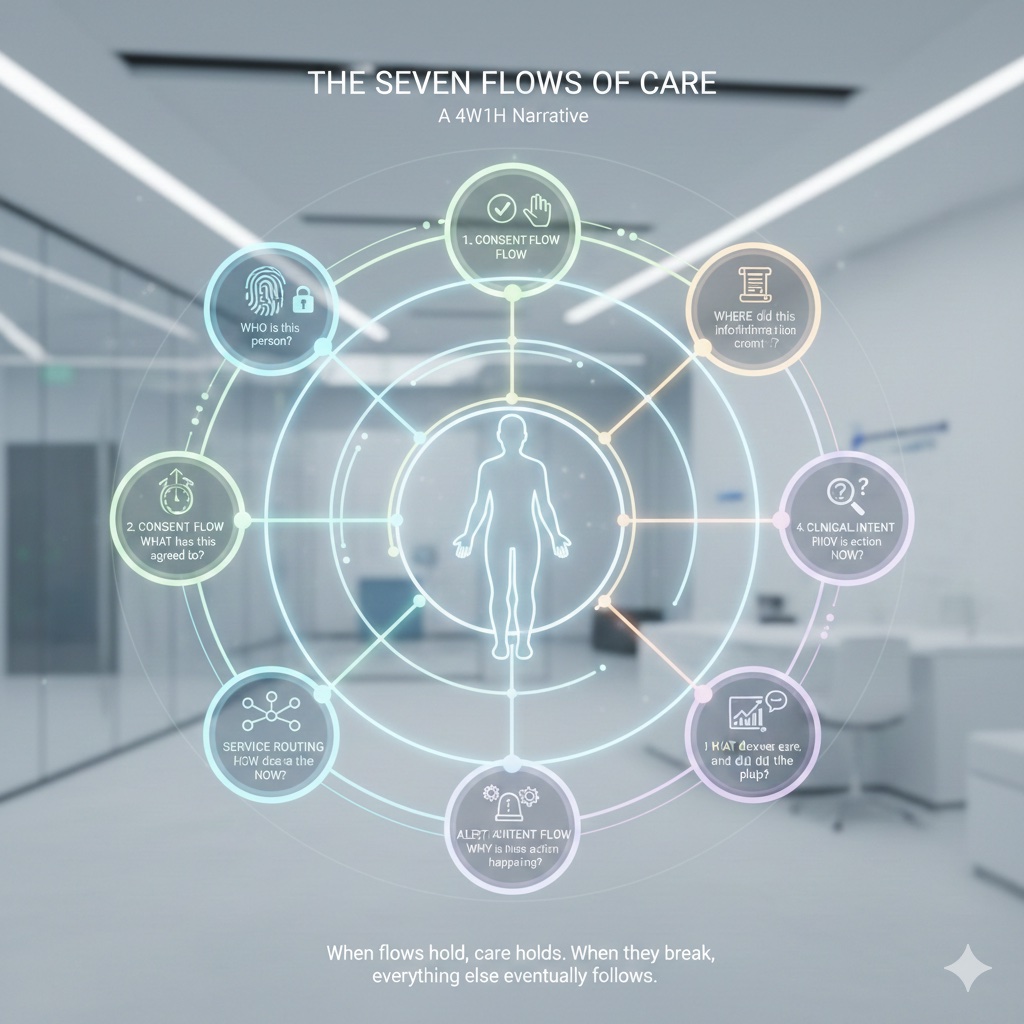
Seven Flows of Care

Mind the Gap

Clinical Governance Between Private Healthcare Providers

Architecture of Trust

The Handover That Never Happened

When Your Patient Becomes Nobody's Patient
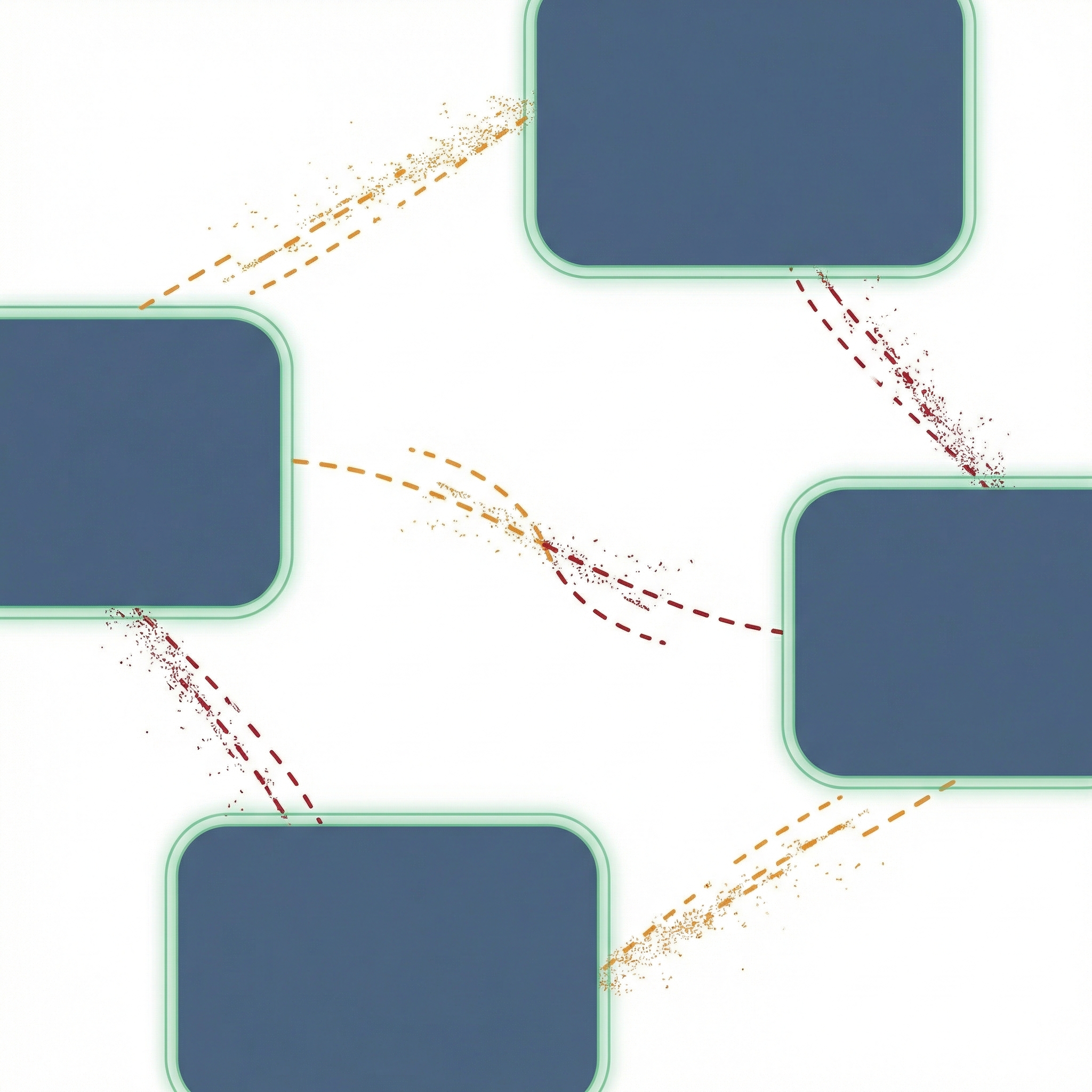
9 Clinical Risks CQC Cannot See
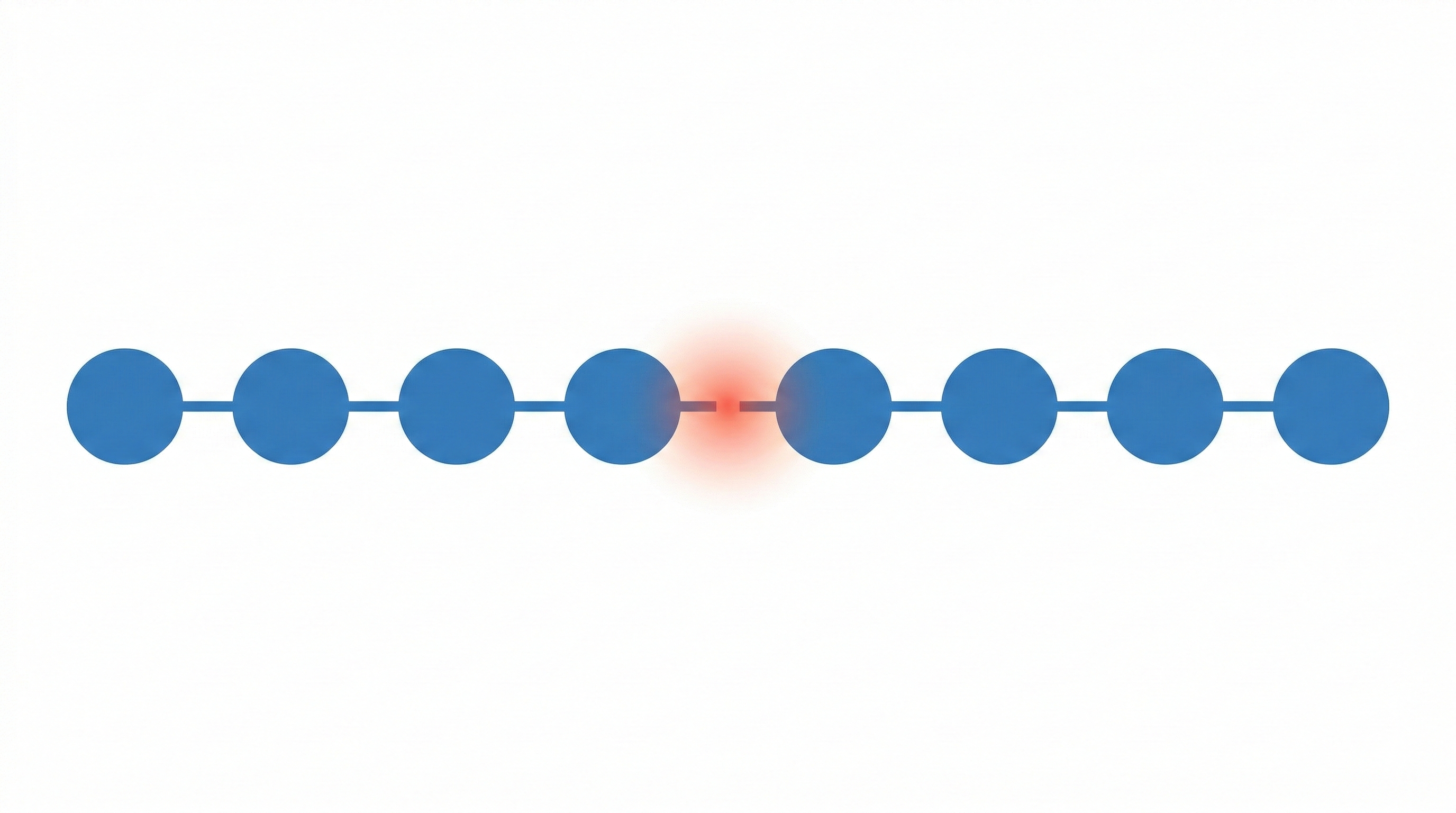
Safety Lives in the Transitions
The Seven Flows
Safe handover depends on more than a message being sent. Identity, consent, provenance, intent, responsibility, routing, and outcome must all hold across boundaries.
What's your Boundary Risk Score?
Every existing assurance framework measures governance within organisations. None measures what happens between them. Start with one crossing. Score the risk. See where responsibility is unclear.
Start with one crossing
You do not need to replatform everything. Start with one crossing. Map the handover. Identify where responsibility becomes unclear. Prove the model in one real boundary. Extend from evidence.
Discovery
Map your current handover points. Identify where governance is implicit, absent, or failing.
Learn more →First Crossing
Govern your highest-risk boundary. Prove the model works in your environment.
Learn more →Extend
Add boundaries based on demonstrated value. Each builds on the infrastructure established by the first.
Learn more →Embed
Governance becomes infrastructure. Boundaries are governed without conscious effort.
Learn more →Ready to start with one boundary?
Start with a discovery call. We will map your current handover points, identify where responsibility is unclear, and scope a first governed boundary.
Book a discovery call