KNOWLEDGE SERIES

Architecting Neighbourhood Health

A Governance Framework for the NHS Ten Year Plan’s Neighbourhood Model

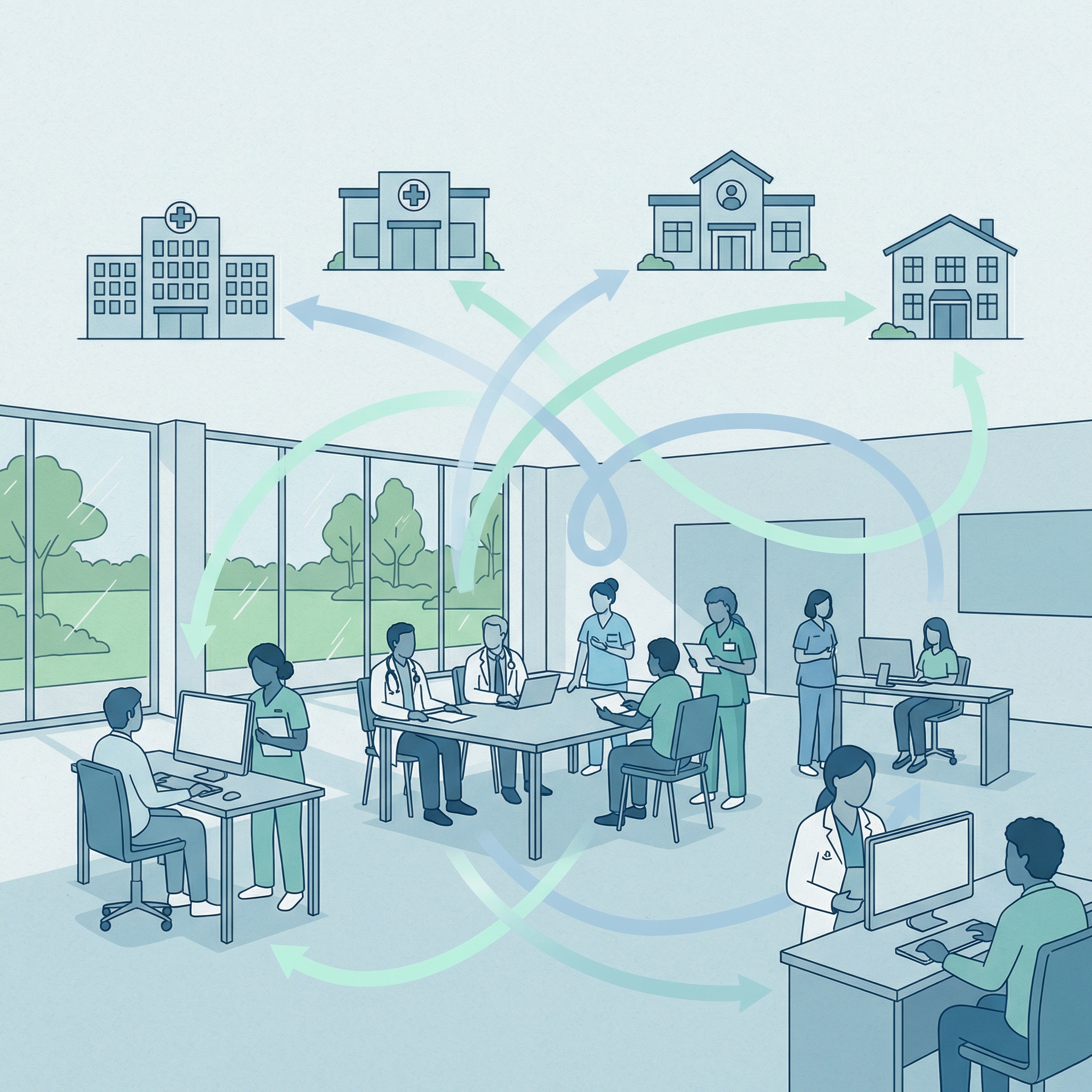
The NHS neighbourhood health model multiplies organisational boundaries within a single building. Why co-location doesn’t solve the governance problem — and what infrastructure is needed before centres open.

For teams implementing neighbourhood health centres. See also: Neighbourhood Health

10 Posts Published
~236 Minutes Total
Active Series Status

Why This Series Matters

The neighbourhood health model is the centrepiece of the NHS Ten Year Health Plan. Forty-three places are already in the National Neighbourhood Health Implementation Programme. But the governance conversation focuses on committee structures and reporting lines — not on what happens at the clinical boundary when responsibility transfers between co-located organisations. This series examines how the Seven Flows methodology applies to neighbourhood health centres, why the Constitutional Transition Matrix reveals hidden risk within a single building, and what governance infrastructure must be built before centres open.

Start Here: Reading Pathways by Role

~236 minutes across 10 articles. Choose the pathway that matches your role.

ICB Leaders & Programme Teams

Understand why the NNHIP governance conversation addresses committee structures but not what happens at clinical boundaries — and what the Boundary Readiness model replaces PPT with.

~68 min reading time
Clinical Safety Officers

See how DCB 0129/0160 gaps at organisational boundaries create unaddressed hazards — and what MVRT-capable infrastructure and boundary hazard logs actually require.

~74 min reading time
IG Leads & Data Protection Officers

Understand why co-location multiplies data controller complexity and what lawful data sharing at neighbourhood boundaries requires across five constitutional domains.

~74 min reading time

All 10 Articles

The complete governance framework for neighbourhood health boundaries

1

Architecting for Neighbourhood Health: What the Implementation Programme Is Missing

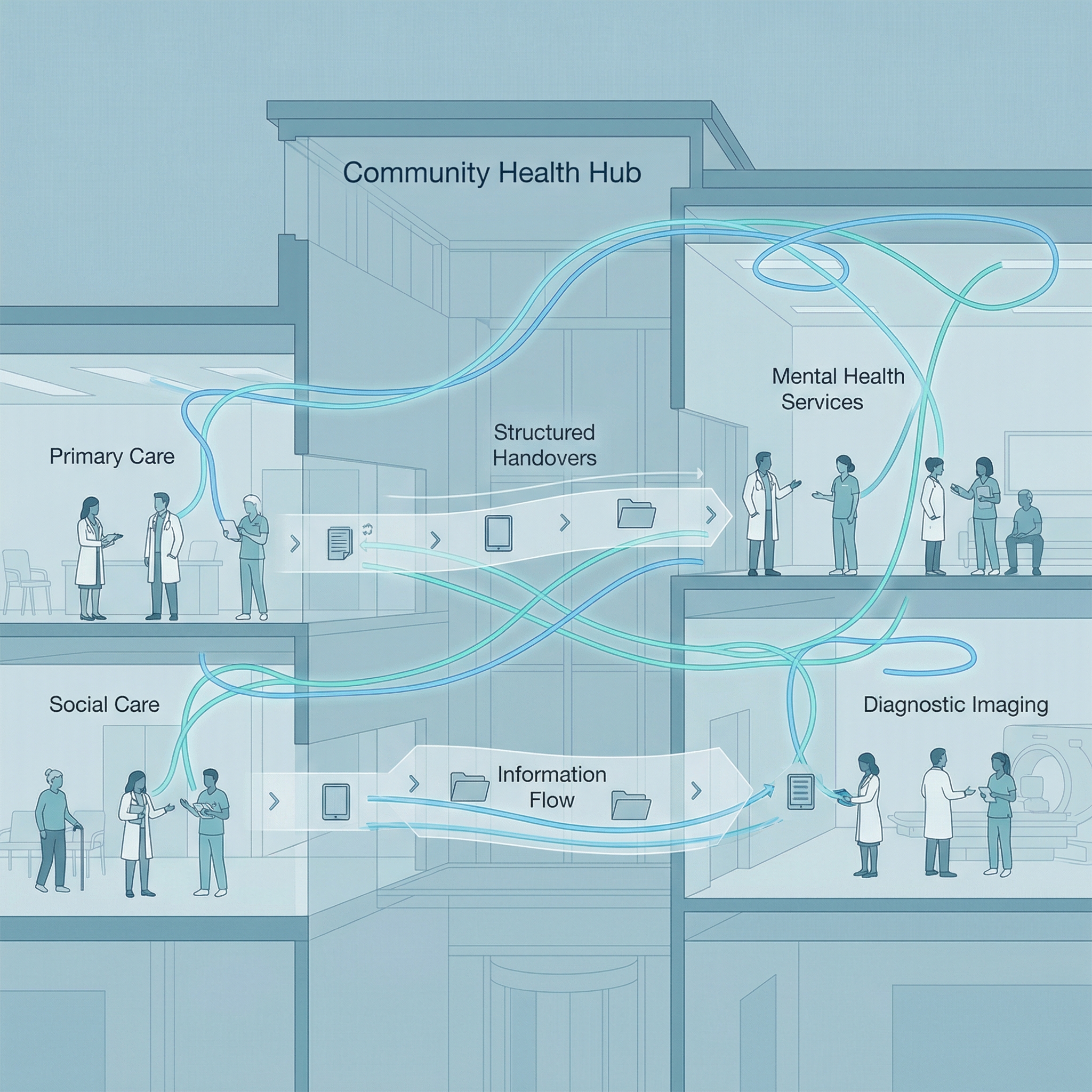
The neighbourhood health model multiplies organisational boundaries within a single building. Co-location changes the experience but not the legal architecture. The governance conversation is about structure — the gap is about boundaries.

2

Architecting for Neighbourhood Health: Mapping the Seven Flows in a Neighbourhood Health Centre

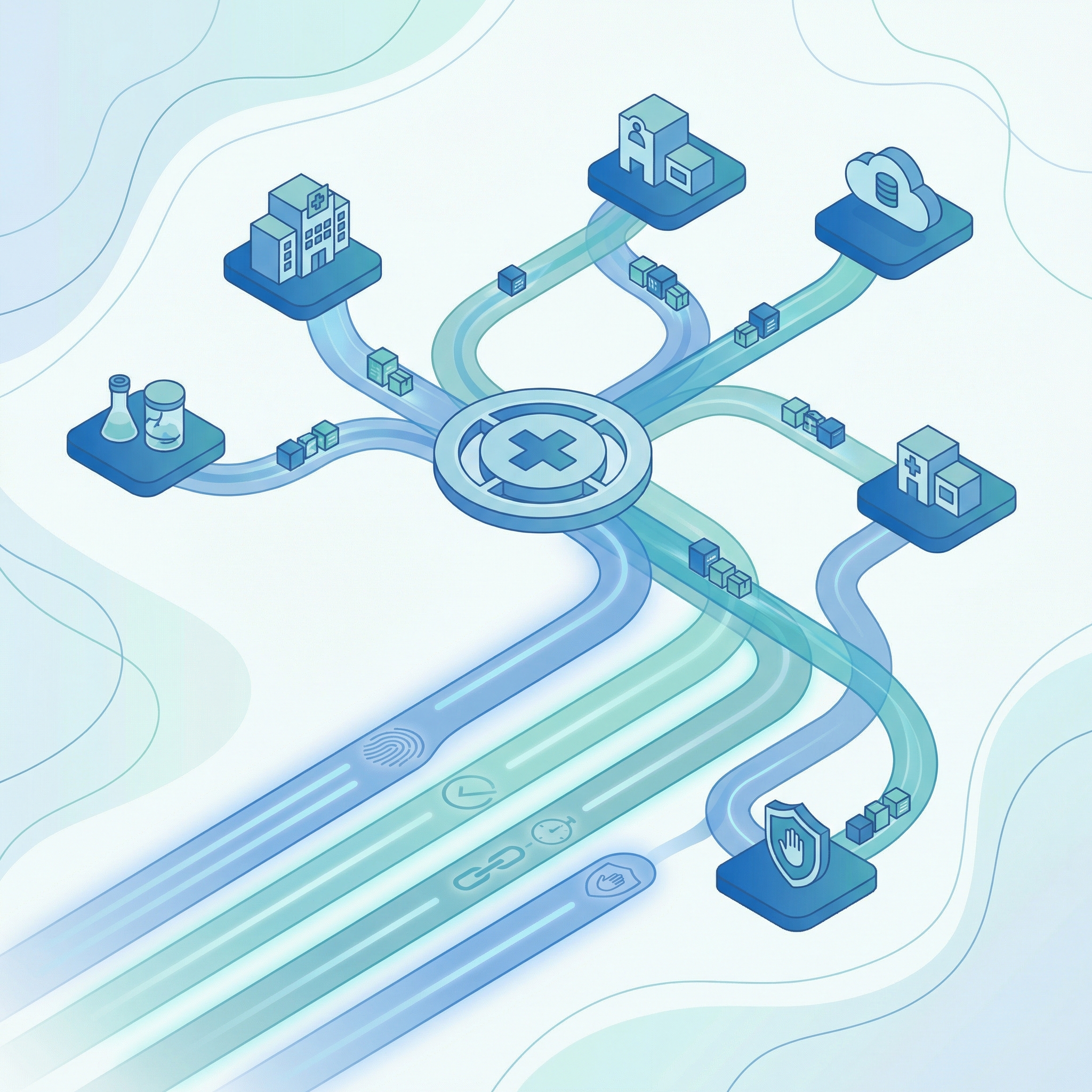
The Seven Flows framework defines what must function at every organisational crossing — Identity, Consent, Provenance, Clinical Intent, Alert & Responsibility, Service Routing, and Outcome — and why mapping comes before service design.

3

Architecting for Neighbourhood Health: Clinical Responsibility Transfer — Why Handover Frameworks Don’t Cross Organisational Boundaries

SBAR and existing handover protocols were designed for transfers within organisations. MVRT is the principle for transfers between them — and the neighbourhood health model is about to test it at unprecedented scale.

4

Architecting for Neighbourhood Health: Constitutional Complexity in Neighbourhood Health Centres — Five Organisations, Five Legal Frameworks, One Building

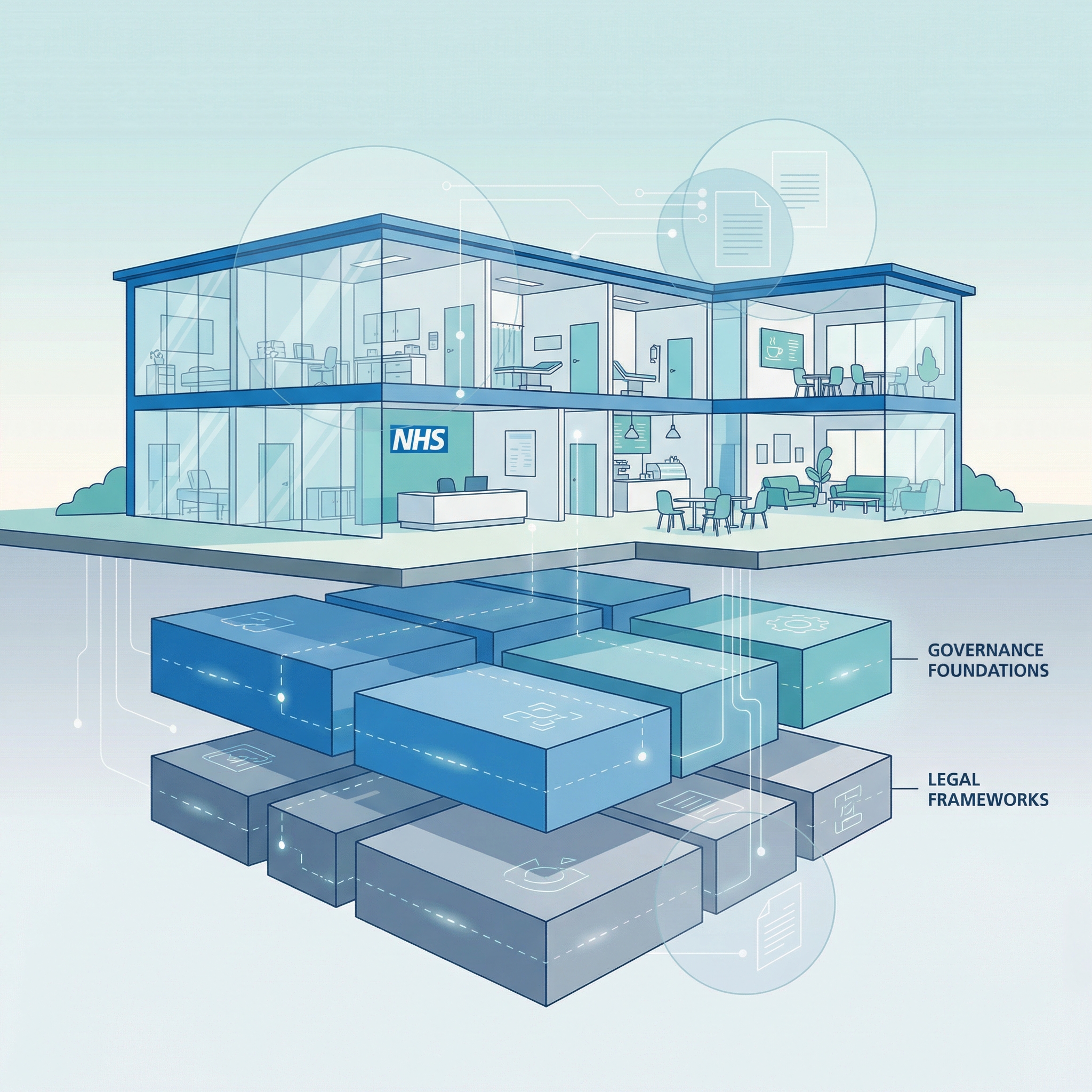
Five organisations share a neighbourhood health centre — each constituted under different legislation, regulated by different bodies, with different data controller status. Constitutional governance is the foundation the implementation programme is missing.

5

Architecting for Neighbourhood Health: Boundary Readiness — Why “People, Process, Technology” Fails at Healthcare Boundaries and What Replaces It

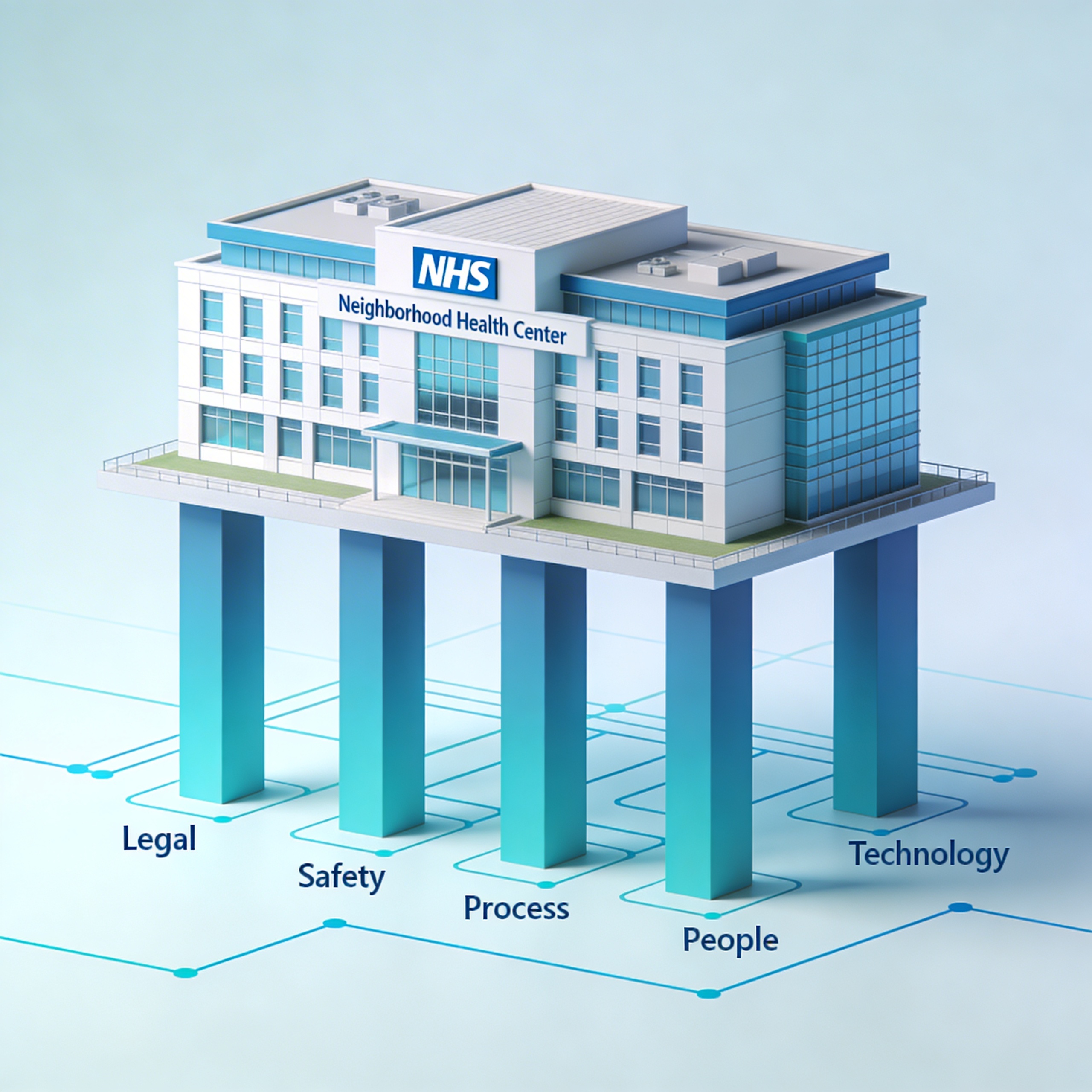
People, Process, Technology was designed for single-organisation transformation. The Boundary Readiness model replaces PPT with five pillars — Legal, Clinical Safety, Process, People, Technology — assessed in dependency order at every bilateral boundary.

6

Architecting for Neighbourhood Health: The Legal Pillar — Data Sharing, Contractual Frameworks, and Constitutional Compliance at Healthcare Boundaries

The Legal pillar answers one question: may this boundary crossing happen? Every cross-boundary data flow must satisfy UK GDPR and common law duty of confidentiality simultaneously. Without lawful DSAs, DPIAs, and Caldicott coordination at every bilateral boundary, everything built on top is unlawful.

7

Architecting for Neighbourhood Health: The Clinical Safety Pillar — When the Hazard Sits Between Organisations

The Clinical Safety pillar answers what goes wrong when a boundary crossing fails. DCB 0129 and DCB 0160 are scoped to single organisations — boundary hazards fall through the gap. Seven Flows hazard identification, cascade-adjusted scoring, and CSO coordination fill the space between hazard logs.

8

Architecting for Neighbourhood Health: The Process Pillar — Crossing Choreography and the Pre-Conditions Nobody Defines

The Process pillar asks what must each party confirm before this specific crossing can validly occur. Crossing type enumeration, pre-condition frameworks (sender, receiver, bilateral), escalation pathways, and informal crossing governance at every bilateral boundary.

9

Architecting for Neighbourhood Health: The People Pillar — Why Generic MDT Training Doesn’t Cross Organisational Boundaries

The People pillar asks whether clinicians who work at boundaries understand the governance architecture — legal literacy, clinical safety awareness, crossing choreography knowledge, and escalation competence developed per boundary, not as generic MDT training.

10

Architecting for Neighbourhood Health: The Technology Pillar — Why Interoperability That Doesn’t Preserve Governance Is Interoperability in Name Only

The Technology pillar asks whether digital infrastructure enforces or merely enables the governance architecture defined by the preceding four pillars — identity verification, consent recording, provenance preservation, clinical intent, MVRT-capable responsibility tracking, service routing, and outcome communication at every bilateral boundary.

For Who

  • ICB leaders and NNHIP programme teams
  • NHS executives and ICS leaders
  • Clinical Safety Officers
  • Primary care leaders and PCN managers
  • Private healthcare group boards

Series Author

Julian Bradder
CEO, Inference Clinical
julian@inferenceclinical.com

How Would Your Neighbourhood Boundaries Score?

Take the free Boundary Risk Score to see where your organisational boundaries stand — or explore the full Boundary Risk Assessment methodology.